Dr. Goldberg treats meniscus tears in Austin, an injury to the C-shaped cartilage that cushions the knee. Many tears improve with rest, physical therapy, and injections that calm swelling. When a tear catches or locks the knee, Dr. Goldberg discusses arthroscopic repair or trimming and explains which option fits the tear.
Tyler Goldberg diagnoses and treats meniscus tear in Austin, from the first visit through recovery.
What is Meniscus Tear?
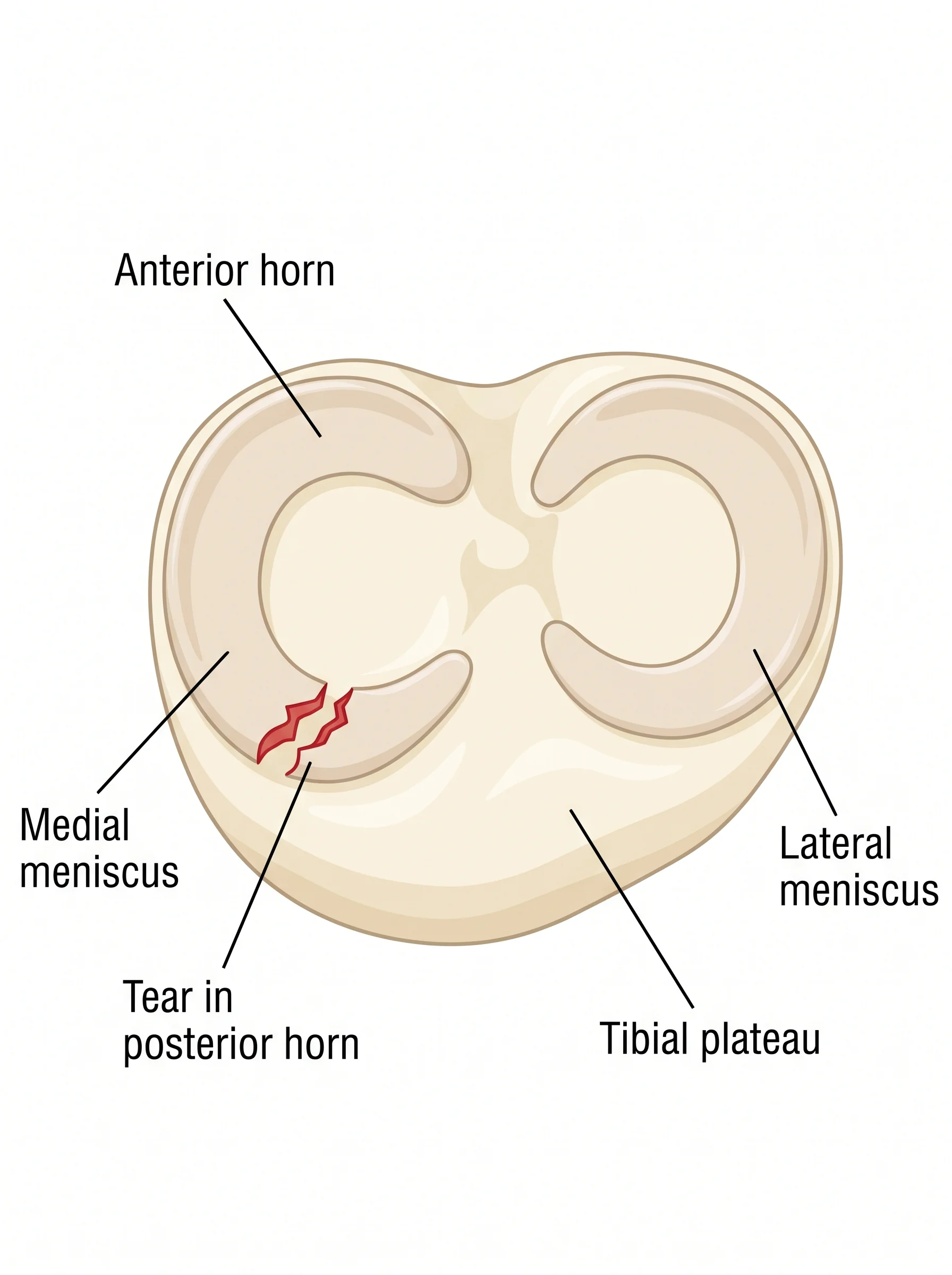
The meniscus is a wedge of cartilage that sits between the thigh bone and shin bone and spreads load across the knee.
Each knee has two, one on the inner side and one on the outer side.
Tears happen two ways. A younger person may twist the knee during sport and feel a pop. An older person may tear a meniscus that has weakened with age, sometimes without a clear injury.
Common symptoms are pain along the joint line, swelling, and a sense that the knee catches or gives way. A tear that flips into the joint can lock the knee so it will not fully straighten.
How is Meniscus Tear diagnosed, and what does the visit involve?
Dr. Goldberg examines the knee for joint-line tenderness and performs movement tests that stress the meniscus.
X-rays rule out arthritis and other causes. An MRI scan, which shows soft tissue in detail, confirms the tear and its pattern, which guides whether repair or trimming makes sense.
What is recovery like for Meniscus Tear?
Many tears, especially degenerative ones, settle with therapy over several weeks.
A tear that locks the knee, or one in an active person, may be treated surgically. Whether the meniscus is repaired or trimmed depends on the tear's location and blood supply, and Dr. Goldberg will explain which applies to you.
Who treats meniscus tear in Austin?
Tyler Goldberg is a board certified orthopedic surgeon who treats meniscus tear in Austin, TX. Fellowship trained at University of Utah (Adult Reconstruction). Dr. Goldberg sees patients at the practice in Austin; appointments can be requested through this site.
What are the treatment options?
- 01Rest, ice, and activity changes to calm the initial swellingRest, ice, and activity changes to calm the initial swelling.
- 02Physical therapy to restore motion and strengthen the surrounding musclesPhysical therapy to restore motion and strengthen the surrounding muscles.
- 03Anti-inflammatory medicine when appropriateAnti-inflammatory medicine when appropriate.
- 04A corticosteroid injection to reduce inflammation in some casesA corticosteroid injection to reduce inflammation in some cases.
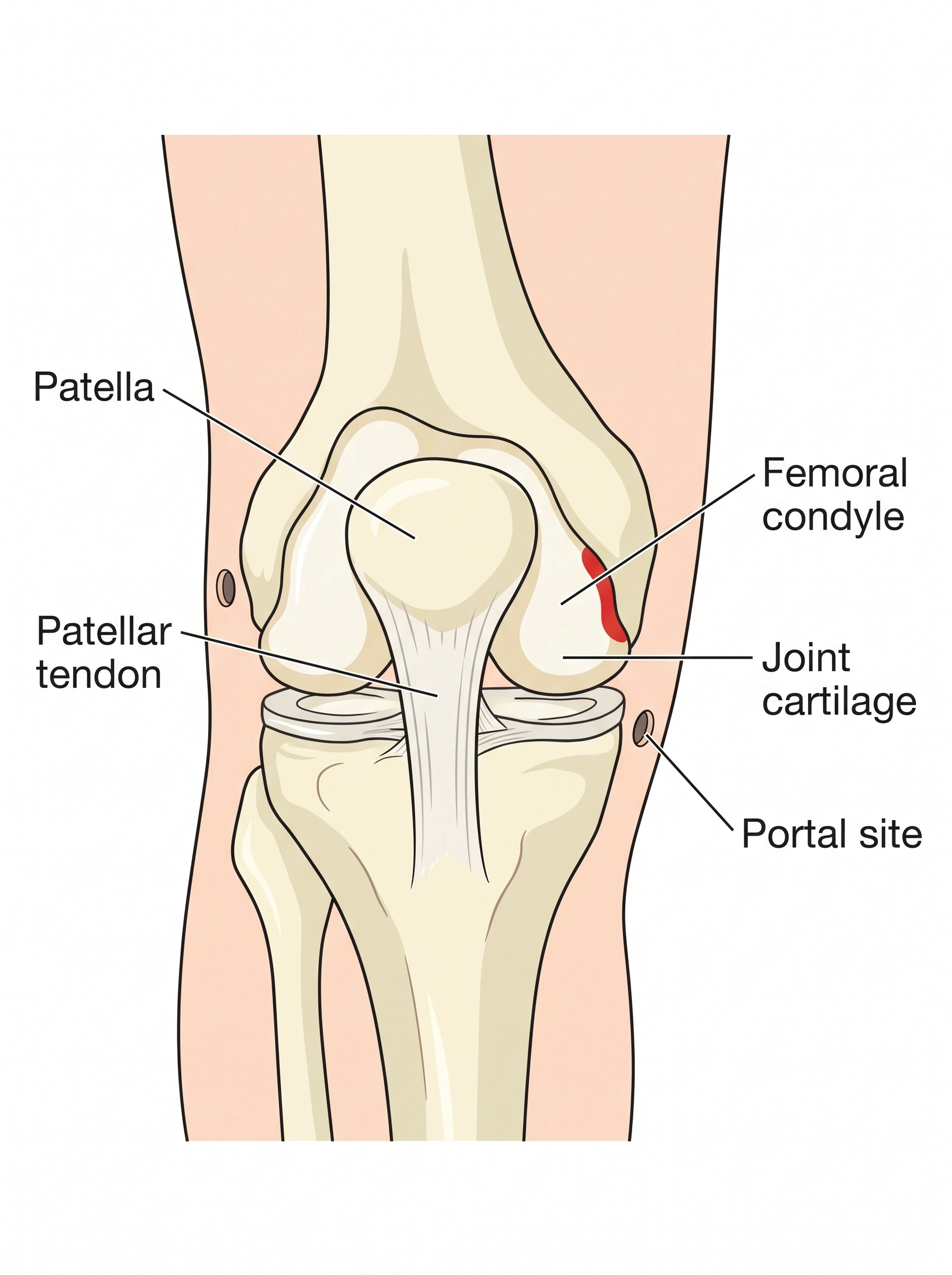
- 05Arthroscopic surgery, a small camera through tiny incisions, to repair or trim the torn tiArthroscopic surgery, a small camera through tiny incisions, to repair or trim the torn tissue when symptoms persist or the knee locks.
What do patients ask most?
Can a meniscus tear heal on its own?+
Do I always need surgery for a torn meniscus?+
What is the difference between a meniscus repair and a meniscectomy?+
How long does recovery take?+
How do payments work?
Contact the office to confirm insurance participation.
Fellowship trained at University of Utah (Adult Reconstruction). Sees patients in Austin.
About Dr. Goldberg →